Seating Chart Etiquette: Who Sits Where at a Wedding
Who gets the head table? Where do divorced parents sit? A practical guide to wedding seating etiquette.
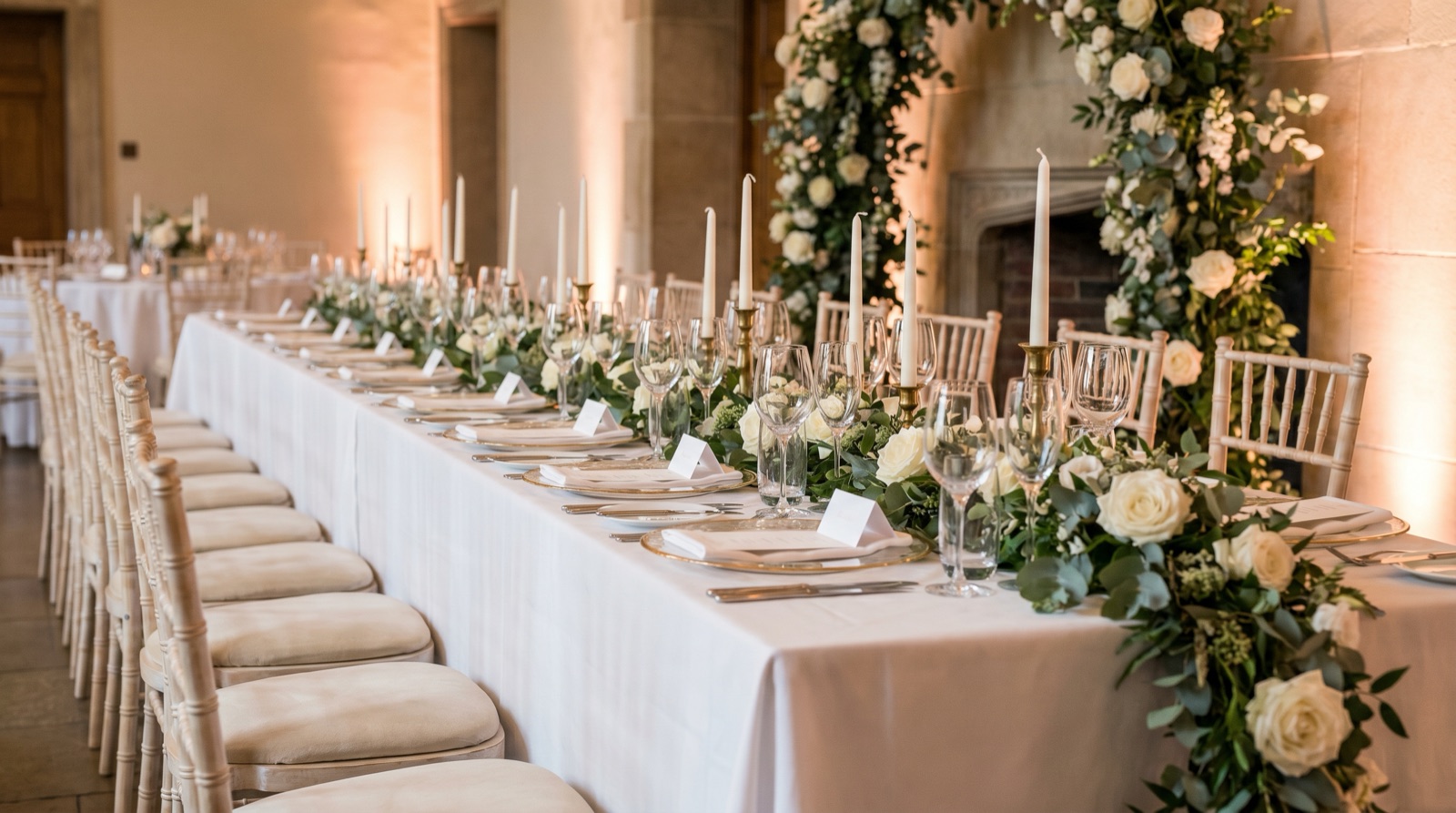
Why Seating Charts Matter More Than You Think

You might be tempted to skip the seating chart and let guests sit wherever they want. Don't. Open seating sounds democratic, but in practice it creates anxiety for guests, awkward clusters of empty chairs, and tables where strangers sit in silence while the bridal party's friends pack one corner.
A thoughtful seating chart isn't about control. It's about making sure your guests have a good time. When people are seated near others they know, or near people they'll genuinely enjoy meeting, the energy at your reception is noticeably better.
But figuring out who sits where? That's where things get tricky. Here's a practical guide to wedding seating etiquette, covering the traditional rules and the modern adjustments that actually make sense.
The Head Table
Traditional Approach
The classic head table seats the wedding party in a long row facing the room. The couple sits in the center, with the maid of honor next to the groom and the best man next to the bride. Bridesmaids and groomsmen alternate down the line.
Modern Approach
Many couples now opt for a sweetheart table, which seats just the two of them. This eliminates the awkwardness of separating wedding party members from their partners for the entire reception. The bridal party sits at nearby tables with their dates and close friends.
Another option: a "VIP table" where the couple sits with their closest friends and wedding party, skipping the formal lineup entirely.
The rule that matters: The couple should be visible and central. Everything else is flexible.
Parents and Family Tables
Where Do Parents Sit?
Traditionally, the parents of the bride sit at one table and the parents of the groom at another, each with their closest family and friends. Both tables should be near the front, close to the couple.
In modern weddings, many couples seat both sets of parents at the same table, especially if the families get along well. This can be a nice gesture of unity.
Divorced Parents
This is one of the most common seating chart headaches. Here are the guidelines:
- Divorced parents should not be seated at the same table unless they have a genuinely amicable relationship and both are comfortable with it.
- Give each parent their own table with their current partner (if applicable) and their side of the family.
- Equal treatment matters. If one parent gets a prime table near the couple, the other should too. Don't play favorites, even unintentionally.
- New partners need seats. If your parent has a significant other, they should be at the same table. Excluding them creates more drama than including them.
Step-Parents and Blended Families
Seat step-parents with their spouse (your parent). If you have a close relationship with a step-parent, they can be at the parents' table. If the relationship is more distant, a nearby family table works. The key is that no one feels deliberately excluded.
Friends: The Grouping Challenge
Keep Friend Groups Together
This seems obvious, but it's where many seating charts go wrong. Your college friends should sit together. Your work friends should sit together. Don't split up established groups just to fill tables evenly.
The Solo Guest Problem
Every wedding has a few guests who don't know anyone else. These are the people who need the most thought. Seat them with the most welcoming, outgoing people you know. Never put all the "loners" at one table; it just creates a table of strangers with nothing in common except not knowing anyone.
Mixed Groups
Sometimes you need to combine groups to fill a table. When you do:
- Pair groups with something in common (similar ages, shared interests, same city)
- Put at least two people who know each other at every table so no one is completely alone
- Avoid seating your wildest friends next to your most reserved relatives
Coworkers and Professional Guests
Seat coworkers together, but be mindful of office dynamics. Don't seat someone next to their boss if they'll feel like they can't relax. If you're inviting clients or professional contacts, they should be at a table with socially confident guests who can carry a conversation.
Children and Kids' Tables
If children are invited, you have two options:
- Seat kids with their parents. Simpler and less stressful for families with young children.
- Create a kids' table. Works well for children old enough to sit independently (usually age 6 and up). Place it near parents so they can check in easily.
Don't seat a kids' table in the back corner. Kids are loud wherever they sit, and putting them far away just means parents spend the reception walking back and forth.
Navigating Tricky Situations
Exes at the Same Wedding
If two of your guests used to date each other, don't seat them at the same table. You don't need to put them on opposite sides of the room either. Different tables with some buffer space is enough.
Feuding Family Members
You know your family. If Aunt Linda and Uncle Steve haven't spoken in five years, separate tables. Period. Don't use your wedding as an attempt at reconciliation.
Guests Who "Can't Sit With" Someone
Take these requests seriously when they come from close family or the wedding party. For casual acquaintances, a polite "we'll do our best" is fine. You can't accommodate every preference, but you can avoid seating people next to someone they actively dislike.
Using Constraints to Handle Etiquette Automatically
Here's where technology can genuinely help. Remembering that your divorced parents can't share a table, your college roommate shouldn't sit near your ex, and your quiet cousin needs outgoing tablemates is a lot to hold in your head.
Brunchie's seating chart tool lets you set constraints: keep these people together, keep those people apart. The auto-assign feature respects those rules when filling tables, so you don't have to manually juggle every restriction.
You can also import an existing seating chart if you've already started planning on paper or in another tool.
General Rules That Always Apply
- No one should sit alone. Every guest should know at least one other person at their table.
- Couples sit together. Always. No exceptions.
- Keep families intact. Parents and young children at the same table.
- Consider mobility. Elderly guests and anyone with accessibility needs should be near exits and restrooms, not in the back corner.
- Balance table sizes. A table of four next to a table of twelve feels wrong. Keep numbers relatively even.
Start Your Seating Chart
The etiquette gives you the framework. The actual arrangement takes time and iteration. Start early, expect to make changes, and don't stress about perfection. A good seating chart makes everyone comfortable. A perfect one doesn't exist.
Build your seating chart with smart constraints on brunchie.app and let the tricky etiquette decisions handle themselves.
Try Brunchie free
Brunchie replaces the spreadsheet, the group chat, and the half-finished invite list. Free forever for the people we built it for.
Get started