How to Split a Hotel Bill 6 Ways Without a Spreadsheet
Splitting shared costs on a group trip shouldn't require accounting software. Here's a simpler way.

The math nobody wants to do
Six friends. One Airbnb for four nights. Two rental cars. Fourteen restaurant bills. A grocery run. Airport parking. A snorkeling tour that only four people went on.
At the end of the trip, someone pulls out their phone and tries to figure out who owes whom. One person paid for the Airbnb. Another covered the rental car. A third put every dinner on their credit card for the points. Someone else grabbed groceries twice.
The math isn't hard—it's tedious. And it gets worse when not everyone participated in every expense. The snorkeling tour was only four people. The rental car was only five because one person flew in separately. One person left a day early and shouldn't pay for the last night's dinner.
This is the point where someone opens a spreadsheet. And that's where friendships go to be tested.
Why spreadsheets fail at expense splitting
They require manual formulas
Every expense needs a formula that divides the cost among the right people. When someone is excluded from an expense, you need to adjust the formula. When someone paid for two things on the same day, you need separate line items. One wrong cell reference and the whole thing is off.
Nobody else updates them
The person who created the spreadsheet is the only one who maintains it. Everyone else adds expenses verbally—"hey, I paid $45 for lunch"—and expects the spreadsheet person to log it. Two days into the trip, the spreadsheet is behind.
The settle-up calculation is a nightmare
Even if you perfectly track every expense, calculating who owes whom at the end is a multi-step problem. Person A paid $800 total but only owes $600. Person B paid $200 but owes $500. Person C paid nothing but owes $400. The optimal settle-up—minimizing the number of transactions—requires math that most people don't want to do at the end of a vacation.
A better approach
Instead of a spreadsheet, use a tool that's built for this. Log expenses as they happen, tag who was involved, and let the app calculate the settle-up automatically.
Here's how it works in Brunchie.
Step 1: Create a hangout for the trip
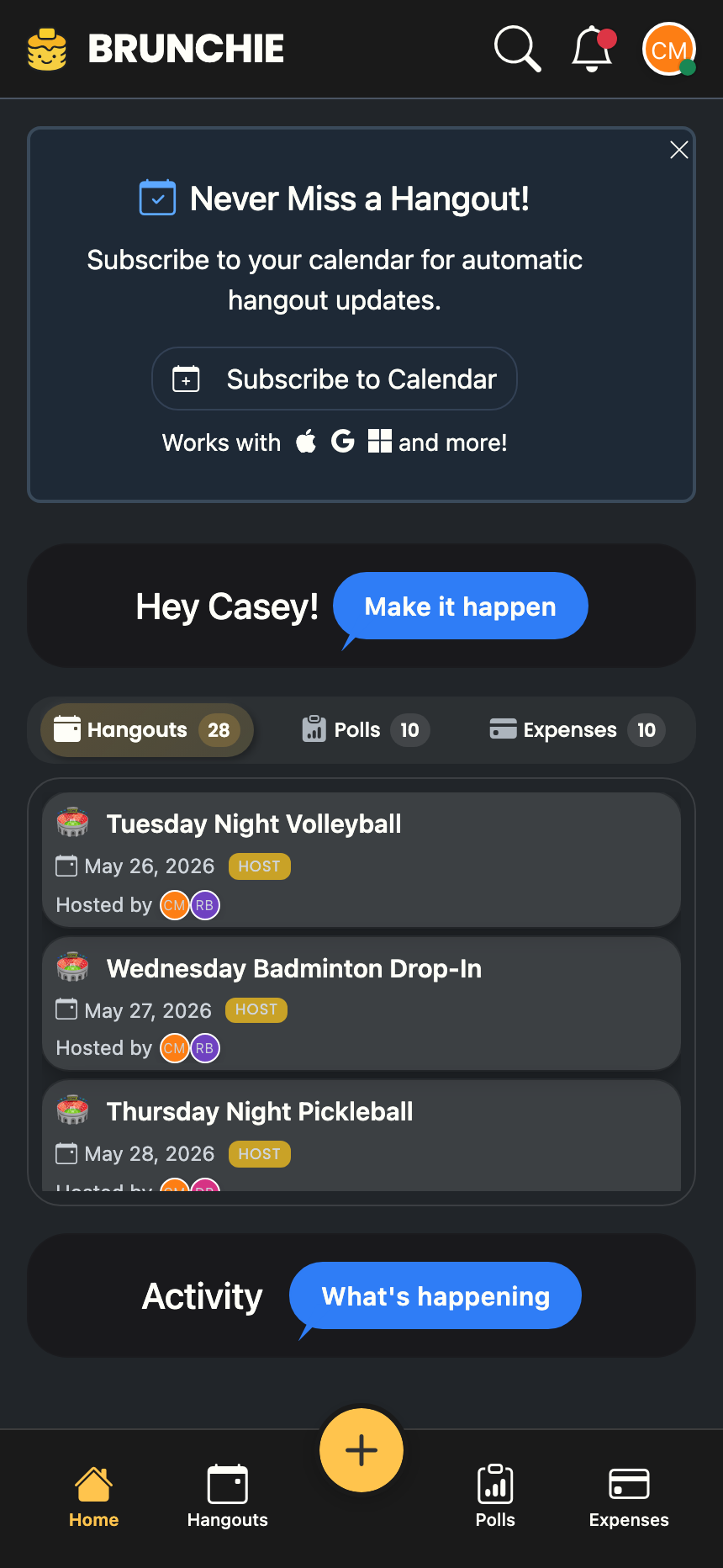
Before the trip starts, create a hangout and add everyone in the group. This becomes the single source of truth for all trip logistics—not just expenses but also the itinerary and any group decisions. See the Japan trip setup guide for a full walkthrough of setting up a trip hangout.
Step 2: Log expenses as they happen
When someone pays for something, they open the hangout and add the expense. Enter the amount, who paid, and who it's split among. Takes about 15 seconds.
Paid for the Airbnb? Log it, split among all six people. Covered the snorkeling tour? Log it, split among the four who went. Bought groceries? Log it, split among everyone or just the people at the house that day.
The key is logging expenses in real time instead of trying to reconstruct them later. When everyone has access to the hangout, anyone can add expenses—not just the designated spreadsheet person.
Step 3: Let settle-up do the math
At any point during or after the trip, check the settle-up summary. It shows the net balance for each person—who's owed money and who owes money—and calculates the minimum number of transactions needed to settle all debts. Each person you owe money to has their preferred payment details right there on screen, so you can pay without having to ask how they want to receive it.
No formulas. No manual calculation. No arguments about whether someone already paid for something. The ledger is right there, visible to everyone.
Real scenario: the beach house trip
Let's walk through a real-ish example.
Six friends rent a beach house for a long weekend. Here are the expenses:
- Airbnb ($1,800) — Paid by Alex, split 6 ways
- Rental car 1 ($280) — Paid by Blake, split among Blake, Casey, Drew
- Rental car 2 ($260) — Paid by Emery, split among Alex, Emery, Frankie
- Groceries day 1 ($120) — Paid by Casey, split 6 ways
- Dinner Friday ($180) — Paid by Drew, split 6 ways
- Surfing lesson ($200) — Paid by Alex, split among Alex, Blake, Casey, Frankie
- Groceries day 2 ($95) — Paid by Frankie, split 6 ways
- Dinner Saturday ($220) — Paid by Emery, split 6 ways
- Boat tour ($300) — Paid by Blake, split among all 6
- Dinner Sunday ($150) — Paid by Casey, split among Casey, Drew, Emery, Frankie (Alex and Blake left early)
In a spreadsheet, this is 10 line items with variable splits, six participants, and a settle-up calculation that requires tracking each person's total paid vs. total owed. Doable, but annoying.
In Brunchie, you log each expense as it happens, mark who paid and who's included, and the settle-up updates automatically. At the end of the trip, it might look something like:
- Drew pays Alex $85
- Frankie pays Alex $70
- Casey pays Blake $40
- Drew pays Emery $55
Four transactions. Done. No spreadsheet. No arguments. No one pulling out a calculator at the airport.
Tips for stress-free trip expenses
Log in real time
Don't wait until the end of the trip. Log each expense right after it happens. This avoids the "wait, who paid for that dinner on Thursday?" problem and keeps the ledger accurate.
Be specific about who's included
Not every expense involves everyone. Be deliberate about selecting which people are part of each expense. This is where most informal splitting goes wrong—people assume everything is split equally when it shouldn't be.
Let anyone add expenses
Give everyone in the group access to the hangout so anyone can log expenses. This distributes the work and ensures nothing gets missed because the "money person" was busy.
Settle up within a week
Don't let debts linger. As soon as the trip is over, open the settle-up summary—each person's payment details are right there, no need to ask. Share the summary in the group chat if you want, send the payments, and you're done. The longer you wait, the more likely someone forgets or disputes an amount.
Set your payment methods ahead of time
If you're the one who fronts money on trips, add your preferred payment details to your Brunchie profile before you leave. Anyone who owes you will see them automatically on the settle-up screen—no chasing required on either end.
Beyond the hotel bill
Expense splitting isn't just for trips. It's useful for any situation where a group shares costs:
- Roommates splitting rent, utilities, and household supplies
- Wedding parties sharing costs for bachelor/bachelorette events
- Friend groups splitting dinner bills, concert tickets, or gift funds
- Teams tracking shared project expenses
The expense splitting guide covers all of these scenarios, and the post on group trip expense splitting goes deeper on the travel use case specifically.
Skip the spreadsheet
Your next group trip should end with good memories, not a Google Sheet. Log expenses as you go, let the app handle the math, and settle up before you unpack.
Get started at brunchie.app.
Try Brunchie free
Brunchie replaces the spreadsheet, the group chat, and the half-finished invite list. Free forever for the people we built it for.
Get started