Why Every Wedding Needs a Seating Chart (and How AI Helps)
A seating chart isn't just about logistics—it shapes the entire guest experience. Here's why, and how AI makes it painless.
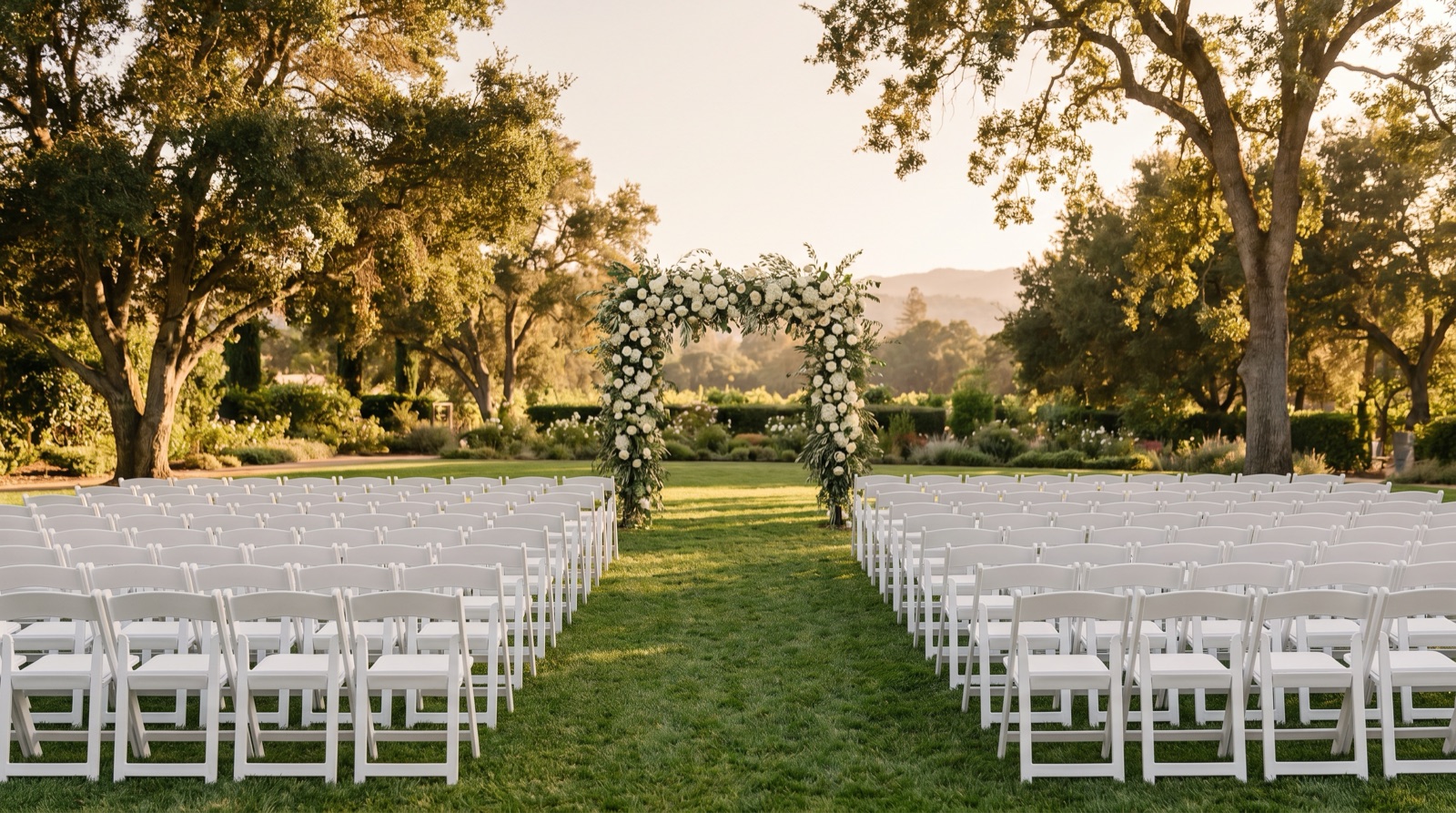
The case against "just sit anywhere"

Open seating sounds relaxed and casual. Let guests choose their own tables, no assigned seats, no pressure. In theory, it's the low-stress option. In practice, it creates a different kind of stress entirely.
Couples arrive and split up to sit with their respective friends. Your elderly grandmother ends up at the back table near the speakers. The guests who don't know anyone stand awkwardly scanning the room for a familiar face. Your college friends cluster at one table while the empty seats at your partner's family table make things feel unbalanced.
Open seating doesn't eliminate decisions—it just pushes them onto your guests, who are making those decisions in real time, without context, and sometimes with hurt feelings.
Five reasons your wedding needs a seating chart
1. Guest comfort
Your guests are doing you a favor by showing up, especially the ones who traveled. The least you can do is make sure they're sitting near people they'll enjoy. A seating chart lets you place friends together, seat couples side by side, and give shy guests a table with at least one person they know.
This is the kind of thing guests never notice when it goes right—but absolutely notice when it goes wrong.
2. Dietary efficiency
If your caterer is serving plated meals, seating guests with the same dietary needs at the same table makes service dramatically smoother. Imagine a table where three people ordered the fish, three ordered the chicken, and two are vegan—versus a table where all eight people have the same meal. Your waitstaff will thank you.
Even with buffet-style dining, grouping guests with dietary restrictions together makes it easier for the venue to ensure allergen-free options reach the right tables first.
3. Family dynamics management
Every family has its dynamics. Divorced parents who shouldn't be at the same table. Siblings who need a buffer person between them. The aunt who has strong opinions about everything and the cousin who likes to argue. A seating chart lets you navigate these situations proactively instead of hoping for the best.
This is the part of seating chart planning that most people dread—but it's actually the strongest argument for having one. Without assigned seats, you have no control over these situations. With a chart, you do.
4. Venue coordination
Your venue needs to know the table layout for setup, service, and flow. A clear seating chart tells them exactly how many seats per table, where the head table is, which tables need highchairs or wheelchair access, and how the room should be arranged. This information affects everything from table spacing to speaker placement to dance floor positioning.
Sharing a digital seating chart with your venue coordinator is infinitely better than emailing a handwritten list or a blurry photo of a whiteboard.
5. Guest experience
A seating chart sets the tone for the reception. When guests find their table, they immediately know where they belong. They settle in, introduce themselves to their tablemates, and start enjoying the evening. Without assigned seats, the first 20 minutes of your reception is an anxious game of musical chairs.
Assigned seating also makes it possible to create intentional experiences—seating your single friends at a table together, putting your partner's family near yours to encourage mingling, or placing your most entertaining friends at the table closest to the dance floor.
The hard part: actually making one
Here's why people skip seating charts even when they know they should: the process is painful. Traditional approaches involve sticky notes on a poster board, Excel spreadsheets with color-coded cells, or hand-drawn diagrams that need to be redone every time someone RSVPs or cancels.
The constraints make it feel like a puzzle with too many pieces. You need to seat 120 people across 15 tables while respecting 30 different preferences and restrictions. Move one person and it creates a cascade of conflicts. It's the kind of problem that takes hours of manual work—and even then, you're not sure you've got the best arrangement.
This is exactly the kind of problem that AI is good at solving.
How AI auto-assign works
Brunchie's auto-assign feature takes your guest list, your table layout, and your preferences, then runs an algorithm to find the optimal placement. Here's what it considers:
Must-sit-together groups
Couples, families, friend groups—anyone you've flagged as needing to be at the same table. Auto-assign treats these as hard constraints. They will be at the same table, period.
Keep-apart pairs
The exes, the feuding relatives, the coworkers who can't be within earshot of each other. Auto-assign ensures these guests are at different tables, with as much distance as the layout allows.
Dietary groupings
If you've tagged guests with dietary restrictions, auto-assign can cluster them together for more efficient catering service. Vegans at one table, gluten-free at another, standard meals filling the rest.
Accessibility requirements
Guests who need wheelchair-accessible seating, proximity to exits, or specific table locations are placed first, ensuring their needs are met before the algorithm fills remaining seats.
Table capacity balancing
Auto-assign distributes guests evenly across tables, respecting maximum capacities while avoiding half-empty tables that feel awkward.
The result
You get a complete seating chart in seconds. Review it. If something doesn't look right, override it manually—drag a guest to a different table, swap two people, adjust a constraint. Then run auto-assign again on the remaining unplaced guests.
It's iterative, not all-or-nothing. You can auto-assign the whole chart at once, or assign some guests manually and let AI handle the rest. Read the full deep dive in our auto-assign post.
Getting started
If you're planning a wedding and haven't started your seating chart yet, here's the path of least resistance:
- Create a hangout using the wedding template — see the wedding setup guide
- Add your tables and set capacities — the seating charts guide walks through this step by step
- Add your guests and mark preferences (sit together, keep apart, dietary, accessibility)
- Hit auto-assign and review the result
- Share the hangout link with your partner, planner, or venue coordinator
The whole process takes less time than arguing about where Uncle Steve should sit. And unlike a spreadsheet or a sticky-note board, your chart is shareable, editable, and always up to date.
A seating chart isn't busywork—it's one of the most impactful things you can do for your guests' experience. And with AI handling the puzzle-solving, it doesn't need to be the stressful part of planning either.
Start your seating chart for free at brunchie.app.
Try Brunchie free
Brunchie replaces the spreadsheet, the group chat, and the half-finished invite list. Free forever for the people we built it for.
Get started