Group Hiking Trip Planning on Brunchie
Plan a group hiking weekend without losing the trailhead carpool, the gear list, or the friend who flakes on the long route. Polls for the trail, a shared gear and food list, expense splitting, and a photo album that survives the descent — all in one free hangout.
Why group hiking trips break (and where Brunchie picks up the slack)
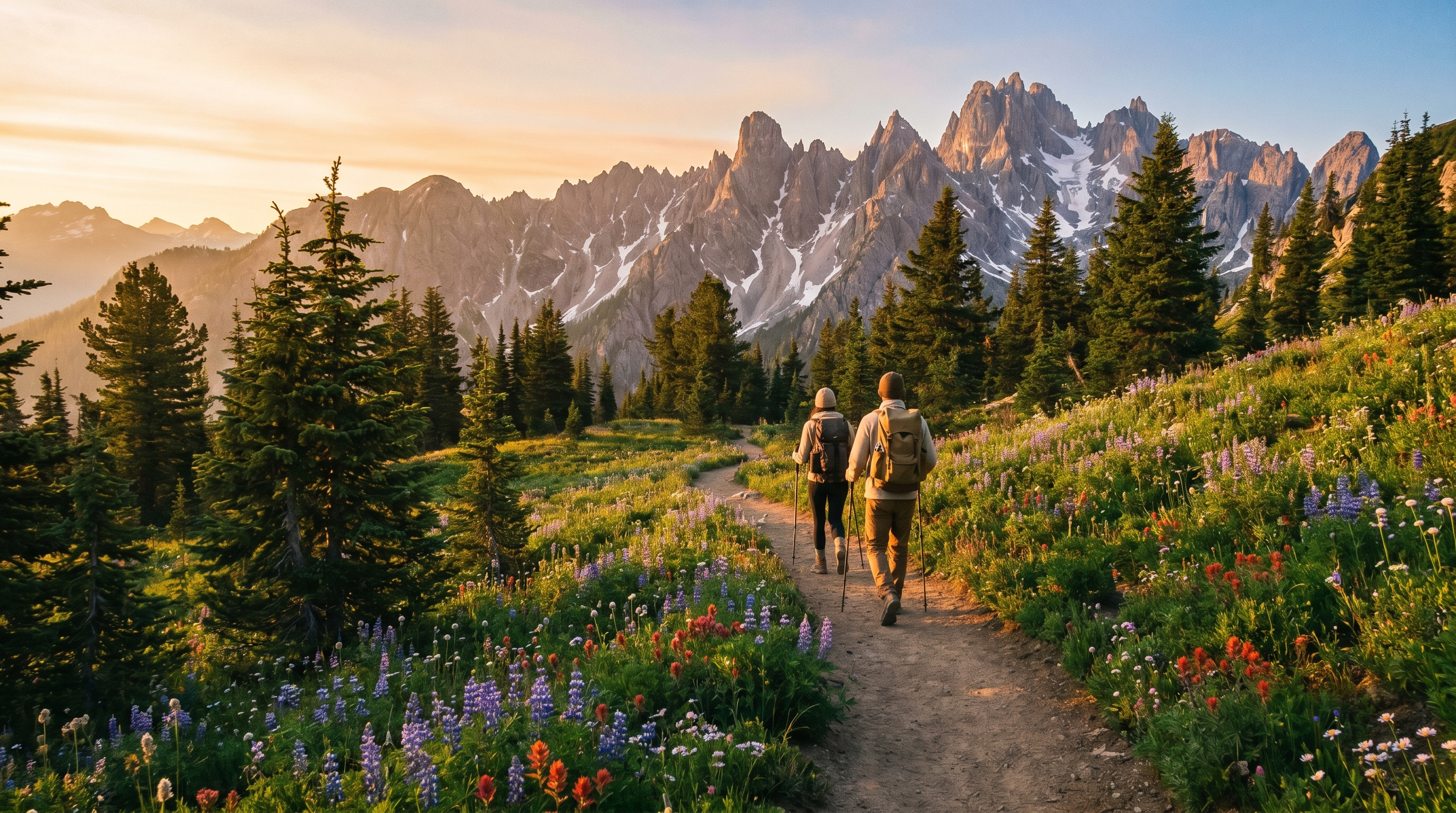
A friend texts the group on a Wednesday: "we should do that hike this weekend." Eight people thumbs-up. Saturday morning at 7 AM, three people are still in bed, one is at the trailhead with the wrong shoes, two haven't eaten and are about to bonk by mile three, and the person who agreed to drive is now driving twice because somebody overslept. The hike was supposed to be the thing. The logistics were what killed it.
Hiking trips break in a specific pattern: the trail seems simple, so nobody plans, and then the friction of getting nine people to one trailhead at one time with the right water and food becomes the actual trip. The fix isn't another spreadsheet. It's putting the four moving parts of any group event in one place: deciding (which trail, which day, which pace group), coordinating (carpool, gear, food, meeting time), spending (gas, parking pass, post-hike dinner, lodging if it's an overnight), and remembering (the summit photo that doesn't get stuck on one person's phone).
Brunchie does all four in a single hangout for free, and a hiking trip is one of the cleanest cases for it. This guide is the playbook. If you want a destination-specific plan, jump to the Deep dives — the Smokies, Rocky Mountain NP, Yosemite, Sedona, the Cascades. The mechanics below are the same regardless of trail.
Step 1 — Decide: trail, date, and pace group
The mistake most groups make is asking "what trail?" in a fourteen-person chat. Nine people don't have an opinion, three argue about distance vs elevation, and the loudest voter wins by default. Run a poll instead.
The organizer narrows it to three trail options based on driving distance, total mileage, total elevation gain, and whether a permit is required (some routes do; the popular ones in Yosemite, Mt. Whitney, and Half Dome have lottery systems with months-out application windows). Drop the three options into a Brunchie poll with the stats in the description. People vote async by Friday morning. The result is the result.
For groups with mixed fitness, run a second poll for pace group — "long and steep" vs "scenic and shorter." Both groups can do the same trail and meet at lunch or the summit, or pick adjacent loops that meet at a junction. This is the trick that keeps the slow hiker from feeling left out and the fast hiker from feeling held back.
What changes for you: The trail is decided by Friday morning instead of Saturday at the trailhead. Quiet voters get equal say. Nobody has to play tour guide in the chat.
Step 2 — Coordinate: gear, food, carpool, and the trailhead meeting time
Hiking is gear-heavy without being gear-complicated, and the failure mode is everyone assuming somebody else brought the first-aid kit. Run a gear poll where each item is an option and votes are "I'll bring this." What doesn't get covered moves to the rental list (or the "we're stopping at the gear shop on the way" list).
For a day hike with eight people, the gear list is short:
- 2L+ water per person (heat-dependent — more in summer)
- Lunch and at least 2 snacks per person
- First-aid kit (one per pace group is plenty)
- Headlamps for anyone in the long-route group (sun goes faster than people expect)
- Trekking poles (optional but a real lifesaver on steep descents)
For a multi-day backpacking trip, the gear list is longer and the stakes are higher — tents, stoves, water filters, bear-proof food storage. Run the same poll structure with each item as an option. Whatever doesn't get claimed moves to the rental list.
Food coordination is the same as a group camping trip: one buyer per meal from a meal poll. Trail lunch is one buyer. Saturday dinner (whether at a campsite or a post-hike restaurant) is its own buyer. Sunday breakfast is its own.
The itinerary is short and worth doing anyway because the trailhead meeting time is what goes wrong. Brunchie's shared itinerary handles:
- Friday afternoon (overnight trips): drive to lodging or campsite, dinner, gear check
- Saturday early AM: caravan meeting point + departure time (most groups underestimate by 30 minutes)
- Saturday trailhead: parking-pass purchase, group photo at the trailhead sign, departure for the trail
- Saturday lunch waypoint: scheduled meet-up if pace groups split
- Saturday descent: target return time at the trailhead
- Saturday evening: post-hike dinner reservation (book it Wednesday — small mountain towns fill up Saturday nights)
For groupmates who are joining without a Brunchie account — the cousin in town, the friend's partner — invite them as external guests by link. They see the trail, the gear list, the meeting time, and the carpool. No app download required. The two flaky friends actually show up on time this way.
If the trail is in a national park or wilderness area with cell-signal trouble, calendar-sync the itinerary the night before so it lives on every phone offline. The shared .ics feed works without service once it's downloaded.
Step 3 — Spend: gas, parking pass, post-hike dinner, lodging if overnight
A group day hike usually runs $30–80 per person all-in (gas + parking-pass split + post-hike beer or coffee). A multi-day backpacking trip runs $200–500 per person depending on lodging or campsite + gear rentals + food. Either way, the splitter discipline matters because hiking trips have a lot of small expenses (parking-pass receipt, gas station snacks, post-hike pitchers) that blur into "we're roughly even" if nobody tracks them.
Brunchie's expense splitter has categories — transportation, food, lodging, activities — and that's the trick: it keeps the gas-station coffee separate from the Saturday dinner so a $40 trip doesn't get blurred with a $400 trip.
Here's how a typical day-hike weekend logs:
- Transportation: gas for the cars (drivers as payers, passengers split), parking pass at the trailhead (one expense, group split)
- Food: trail lunch groceries (whoever bought, group split), post-hike dinner (one tab, group split, big tipper as a separate line if relevant)
- Lodging (overnight only): campsite or Airbnb, one expense, group split
- Activities: rented gear if anyone needed it, one line, those-who-rented split
Settle-up runs Sunday on the drive home — same machinery as group camping trips and group trips abroad. Brunchie's settle-up screen flattens scattered debts into one or two payments per person.
Hiking trips are where the splitter feels overkill at first and indispensable by the third trip. Without it the group rounds to "we're even" and somebody — usually the same somebody — has been overpaying for the parking pass for two years.
Step 4 — Remember: the summit photo doesn't get stuck on one phone
The summit shot, the wildflower stretch on mile two, the ridge silhouette at golden hour on the descent — these are the photos the group will reference for years, and they almost always end up on whichever person remembered to take them. Without a shared album, half the trip's best photos stay in one camera roll forever.
Brunchie's photobooth is the shared album scoped to the hangout. Once cell signal returns at the trailhead, every member uploads from their phone — including the external-guest invitees who didn't sign up. The album lives wherever the trip lives. Three weeks later when somebody wants the summit shot for a profile picture, they open one link.
The trip stops being "a thing we did" the moment the photos scatter across nine phones. The photobooth is the cheap insurance against that — same as it is for bach trips and group camping trips.
What you don't have to do
- Keep the gear list in a Notes app two people forget to check
- Forward the trailhead address to nine people the day before the hike
- Run the gas-money math at the post-hike beer
- Argue about whether to do the long loop or the short loop in real time
- Text the photos one-by-one because the group iCloud album never worked
Deep dives
If you want a destination-specific hiking plan with trail names, parking logistics, and a real-world spending profile, these go deeper. Same Brunchie machinery; different trails, different elevation, different pre-hike breakfast spots.
Common questions
How big is too big for a group hike?
How do you handle different fitness levels in the group?
Day hike or backpacking?
What about people without an app?
How do you split costs when one person drives everyone?
Try Brunchie free
Brunchie replaces the spreadsheet, the group chat, and the half-finished invite list. Free forever for the people we built it for.
Get started