Group Camping Trip Planning on Brunchie
Plan a group camping trip without losing the cooler list, the gas-money math, or the campsite reservation. Polls for the dates, a shared gear list, expenses split with categories, and a photo album that survives the drive home — all in one free hangout.
Why group camping trips break (and where Brunchie picks up the slack)
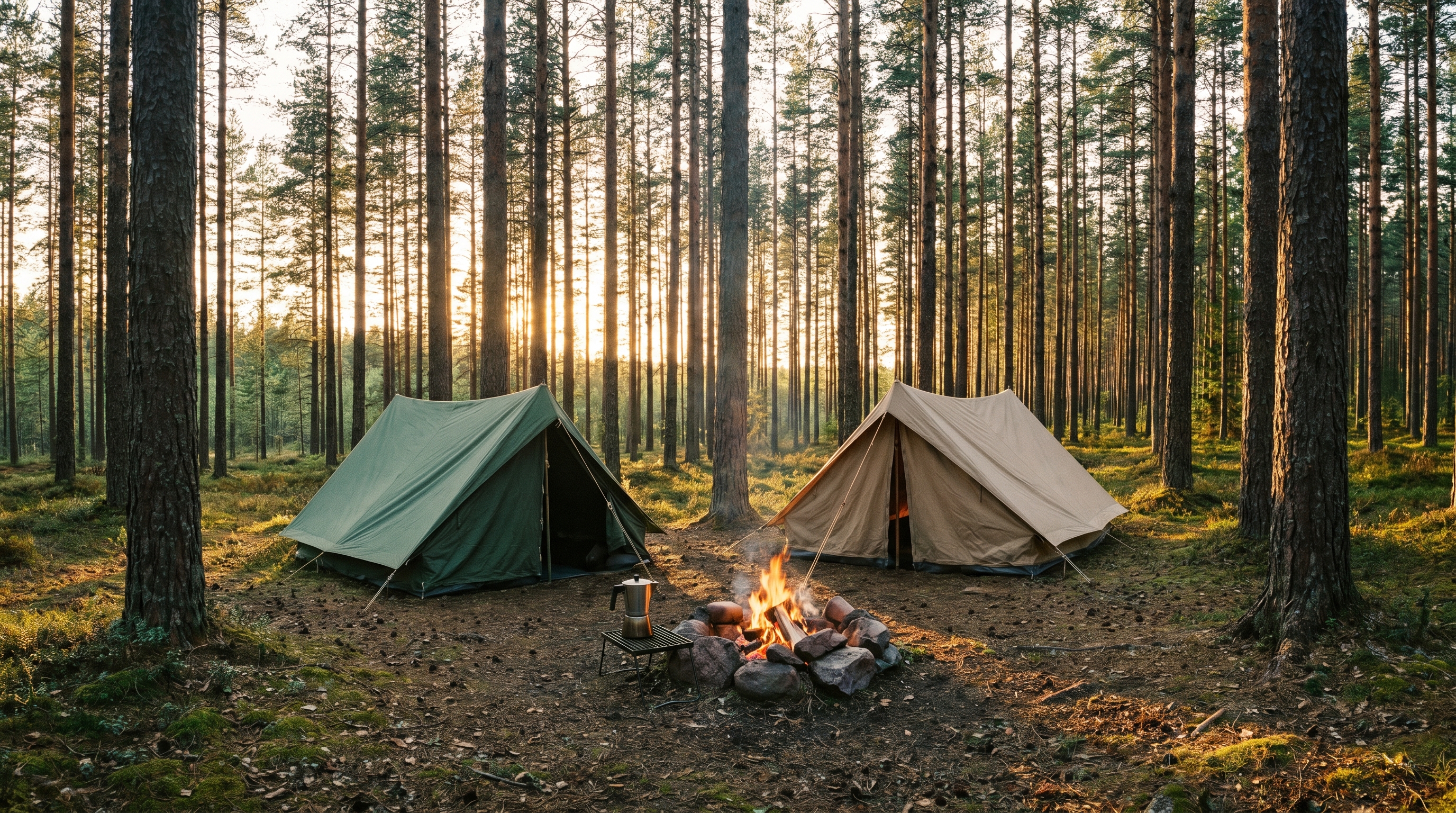
A friend texts the group on a Tuesday in April: "we should camp this summer." Eight people send back a thumbs-up and a fire emoji. By June, nobody has booked a campsite, half the group thought somebody else had a tent, and the food plan is "we'll figure it out at the store." This is the camping-trip group-chat death loop, and it's the same death loop as a bach trip or a wedding weekend — too many decisions, no clear owner, no shared place to track them.
A camping trip is actually four planning problems wearing one tent: deciding (who, when, where), coordinating (gear, drive logistics, the campsite check-in window), spending (gas, groceries, gear rental, the firewood bundle that costs $14 every time), and remembering (the photos that scatter across nine phones the Sunday everyone gets home). Brunchie does all four for free in a single hangout. This guide is the playbook.
If you want a destination-specific plan, jump to the Deep dives — Banff in late summer, Joshua Tree in shoulder season, the umbrella post on top group-activity destinations for 2026. The mechanics below are the same regardless. Camping is one chapter of the summer group hangouts playbook, which runs the same four-phase pattern across festivals, lake days, and backyard parties too.
Step 1 — Decide: campground, dates, and who's driving
The trick to deciding a group camping trip is not asking "where should we go?" in a fourteen-person group chat. The organizer narrows it to three campgrounds based on drive distance from where the group lives, site capacity (most public sites cap at six to eight), and whether the destination requires a reservation that has to land months early. Then it goes to a poll.
In Brunchie, you create the trip hangout, drop in three campground options as poll items (with the per-night fee, the drive time, and a one-line note on the vibe), and set a deadline. People vote when they're free. The losers leave the conversation. The winner becomes the place — and the moment the poll closes, you go book the site, because the group has just authorized it.
Run a second poll for dates if more than one weekend works, and a third for who's driving. The drive poll matters because gas + the cargo capacity in three SUVs is what determines whether the group can bring a canopy, a cooler the size of a microwave, and the speaker someone insists on bringing.
What changes for you: The trip stops being a Tuesday-night argument and becomes a Tuesday-night decision. Quiet voters get equal weight to loud voters because the votes are async.
Step 2 — Coordinate: gear, food, and an itinerary that survives the drive
Once a campground is locked, the gear list is what makes or breaks the weekend. The classic failure mode is arriving with three tents and no stove. The fix is a single shared list everyone can mark "I'll bring this" on. Brunchie supports this two ways: as a checklist post in the hangout, or — if your group prefers polling — as a poll where the options are the gear items and the votes are "I have one to bring." Either way, what doesn't get claimed moves to the rental column, which becomes a single splittable expense.
Same pattern for food. Poll the meals (Friday-night dinner, Saturday breakfast, Saturday lunch on the trail, Saturday-night chili, Sunday breakfast packing-up), then assign one person per meal as the buyer. The expense splitter handles the cost; the meal poll handles the what. Nobody arrives with three packs of hot dogs and no buns.
The itinerary is short and worth doing anyway, because the drive logistics are what go wrong. Brunchie's shared itinerary handles:
- Friday afternoon: caravan meeting point and departure time (most groups underestimate by an hour)
- Friday evening: check-in window at the campground (most public campgrounds have a hard cutoff)
- Saturday daytime: the activity (the hike, the lake day, the ride)
- Saturday night: dinner block + campfire
- Sunday: pack-out window (most sites have a noon cutoff)
For groupmates who are joining without a Brunchie account — the friend's partner, the cousin in town that weekend — invite them as external guests by link. They see the itinerary, vote in the meal poll, and post photos to the album. No app download. The two flaky friends with bad email habits actually show up on time this way.
If the destination is a national park or somewhere with cell-signal trouble, calendar-sync the itinerary the night before so it lives on every phone offline. The shared .ics feed updates if anyone changes the schedule from base camp on Saturday morning.
Step 3 — Spend: gas, groceries, gear rental, and the firewood bundle
Camping is cheaper than most group trips, which makes the math easier — and also means people get sloppy about tracking it, which is when "I think we're even" becomes a six-week argument. The Brunchie expense splitter has categories (food, lodging, transportation, activities, misc) and that's the trick: it keeps food and gear separate so a trip that's $90 a person doesn't get blurred into a single confusing line.
Here's how a typical four-person camping weekend logs:
- Lodging: campsite reservation fee, split four ways
- Transportation: gas for the two cars, the drivers paid, everyone else owes
- Food: Friday-night dinner, Saturday-morning groceries, Saturday-night dinner, each as its own line with the buyer flagged
- Activities: the rental tent + camp stove (one expense, four-way split)
- Misc: firewood, ice, the bag of marshmallows somebody insisted on
Settle-up runs Sunday on the drive home. The screen flattens nine scattered debts into one or two payments per person. Whoever bought the most groceries gets the biggest send. Done.
Camping trips are where the splitter earns its keep. Without it, the group rounds to "we're probably even" and somebody — usually the same somebody — eats $80 they shouldn't have.
The same pattern handles a bigger trip — see the group trip planning guide for the expanded version that includes flights, lodging deposits, and multi-currency. Camping is just a leaner version of the same machinery.
Step 4 — Remember: the album survives the drive home
The cell signal cuts out at the trailhead and then everybody takes a hundred photos. By the time the cars pull back into a service area Sunday, the photo problem starts: nine people have phones, the iCloud invite definitely won't send to everyone, and the best shot of the weekend is on the one phone whose owner is bad at sharing.
Brunchie's photobooth is the shared album scoped to the hangout. Everyone uploads when they get back to signal — including the external-guest invitees who never made an account. The album is searchable, downloadable, and lives in the same place as the gear list and the splitter. Three weeks later when somebody wants the night-sky shot from Saturday, they open one link.
Photobooth was originally built for weddings, but the group-camping use case is closer to its native habitat — a defined window of time, a small group, a lot of phones, no cell service while the photos are being taken.
What you don't have to do
- Maintain the gear list on a spreadsheet that two people forget to check
- Forward the campground confirmation email nine times
- Run the gas-money math at the rest stop on the way home
- Manage three side conversations about whether to do the long hike or the short one
- Text the photos one-by-one because the group iCloud album never worked
Newer tricks worth turning on
A few capabilities landed after this guide first shipped, and they fit camping perfectly:
- A map with a pin for every stop. Add the campsite, the trailhead, and the swimming hole to the itinerary from address autocomplete and each drops a pin, color-coded by schedule — so the caravan finds the exact site loop, not the wrong one two campgrounds over.
- Cap the site, queue the rest. Public sites cap at six to eight. Set an attendee limit to match and turn on the waitlist; extra signups queue instead of bouncing, and the next person moves up automatically when a spot opens. (See attendee limits.)
- Per-guest permissions on the gear list. Make the gear checklist editable to everyone so people claim "I'll bring the stove" themselves, while a hosts-only checklist holds your own pack-out run. Each one shows a badge for its setting — details in the spreadsheets guide.
- Ask Benny. Point the crew at the in-hangout concierge for "what time's the caravan?", "what am I bringing?", "what's the weather Saturday?" — answered straight off the hangout, even better when signal's about to vanish. See the Ask Benny guide.
Deep dives
If you want a destination-specific camping plan with neighborhoods, drive logistics, and a real-world spending profile, these go deeper. They use the same Brunchie machinery; they differ on the trail, the elevation, and the firewood bundle's price.
Deep dives
Specific scenarios — pick the one closest to your group's plan.
By destination
Common questions
How big is too big for a group camping trip?
How do you split groceries when half the group has dietary restrictions?
Can someone in the group join without an account?
How do you handle gear someone already owns vs gear that has to be bought or rented?
What if it rains?
Try Brunchie free
Brunchie replaces the spreadsheet, the group chat, and the half-finished invite list. Free forever for the people we built it for.
Get started