A Banff Destination Wedding, Coordinated: Cross-Border Guests, One Currency Math, Zero Spreadsheets
The hard part of a Banff wedding isn't the venue — it's coordinating a half-domestic, half-American guest list, the room block that books out months early, and the costs that land in two currencies. Here's how to run it in one place.
A Banff destination wedding gets sold to you as a venue problem — which lakeshore, which mountain backdrop, which hotel ballroom. It isn't. The venue is the easy part. The hard part is that half your guest list is crossing a border, the good lodging books out months before you've sent a save-the-date, and every shared cost is about to arrive in two currencies. Get the coordination wrong and the most photogenic wedding in the country turns into an inbox of "wait, who's paying for the shuttle?"
This post is the Banff-specific coordination layer. The full planning mechanics — guest list, seating, comms, the website-facing blocks — live in the wedding planning guide. Here we cover the three things a mountain wedding adds: a permit-gated ceremony decision, a cross-border RSVP, and two-currency cost-splitting.
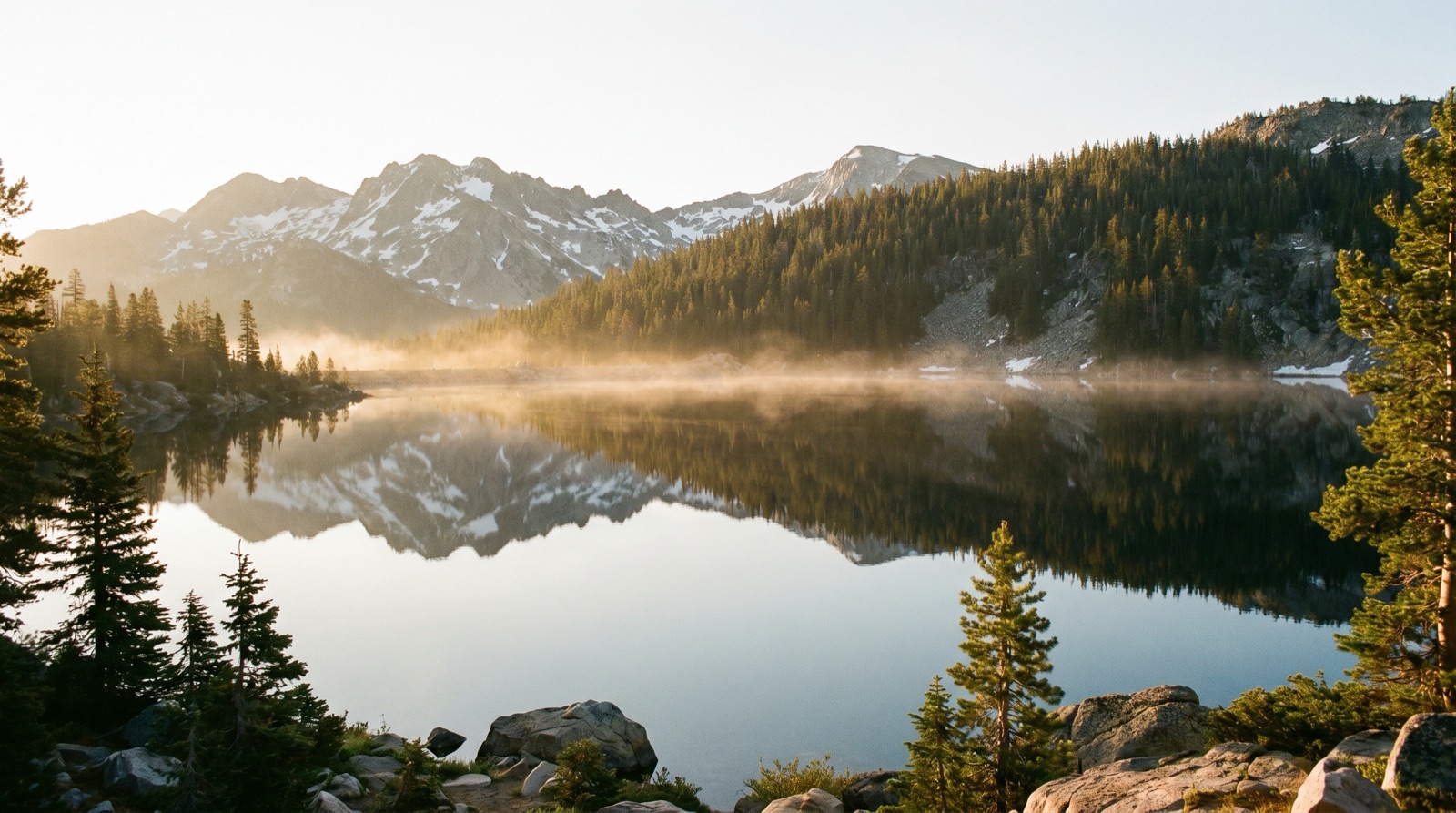
Decide: the ceremony spot is a permit decision, not just a view
What: Pick the ceremony location against the constraint that actually gates it — the permit — not just the photo.
Banff's public ceremony spots are stunning and limited. Cascade Ponds, Tunnel Mountain Reservoir, and Surprise Corner are the ones most couples want, and all three sit on national-park land, which means a Parks Canada special-event permit applied for well in advance. Public sites also restrict guest numbers and amplified sound — so a 120-person ceremony with a PA system is a different conversation than an intimate 30-person vow exchange. Indoor and hotel venues (the Cave & Basin, the Whyte Museum, townsite hotels) trade the open-air backdrop for fewer restrictions and a winter-proof plan.
Why: September is the marquee month — comfortable temperatures, fall colour — which means the best dates and the permits both get claimed early. Decide the spot and the date together, because one constrains the other.
In Brunchie, put two or three ceremony options into a poll with the permit status, the guest-number cap, and the rain/winter backup noted on each. Close the poll early — you're not picking a restaurant, you're racing a reservation window.
The couples who relax in Banff are the ones who treated the permit like the deadline it is. The ones who stress treated it like a formality.
Coordinate: a cross-border RSVP and the room block that books out first
What: Pair the RSVP with quick polls that surface travel reality — passports, arrival airports, who needs a room in the block — beyond a plain yes/no.
Most Banff weddings are "destination" for at least half the list. A plain RSVP yes/no misses the two things that derail mountain weddings: a guest who forgot their passport is valid for flying and for the land border, and a guest who books their own room after the block sells out — so you pair the RSVP with a couple of quick polls. Guest lodging near the townsite books out months ahead — the coordination win is locking the room block and the shuttle, not choosing the florist.
Run a quick poll — "Is your passport valid for travel?" — so it surfaces in the spring, not the week of (an RSVP is just yes/no; a poll is how you collect an answer from everyone). A second poll for who's flying into Calgary's YYC (~90 minutes out, and Roam Transit links the townsite, Lake Louise, and Canmore) versus driving lets you size the welcome-dinner shuttle. Send reminders that nudge only the people who haven't answered — not a blast to everyone.
For the parents, the planner, or a friend handling logistics, invite them as scoped collaborators: they can manage the guest list and the itinerary without owning your account. Don't make a 70-year-old aunt install anything to tell you she's coming — an invite link is enough.

Spend: log in one currency, settle in another
What: Track the shared costs in CAD and let American guests settle in USD — without anyone reconciling two currencies by hand.
A Banff wedding spreads shared costs across the party: the welcome-dinner, the guest shuttle, a group photographer deposit, the welcome bags. Some of it gets paid by the couple, some fronted by a maid of honour or a parent, and the people owing are split across the border. This is exactly where two-currency math eats a weekend.
Log every shared cost in CAD — whoever's card paid is the payer. Brunchie's expense splitter handles multi-currency natively: a guest in Seattle settles their share of the shuttle in USD, a cousin in Calgary settles in CAD, and the conversion happens at settle-up. Nobody opens a currency converter, and nobody — this is the whole point — opens a spreadsheet to chase it.
So what: The cross-border guest list stops being a liability and becomes a non-event. The money resolves itself in everyone's home currency, and the couple never plays bank.

Remember: the album, once everyone's home
The photos from a Banff wedding are the reason people travelled — the reservoir at golden hour, the ridgeline behind the vows, the welcome dinner that ran long. Open a photobooth album so every guest drops their shots into one place. The half of the list that flew home to three different time zones uploads when they land, and the couple walks away with the whole weekend in one room instead of scattered across a hundred phones.

That's the full arc — decide the permit-gated ceremony, coordinate a cross-border RSVP, split the costs in two currencies, and keep the memories together — run from one wedding workspace, not a folder of email threads and a shared sheet nobody trusts.
Common questions
Do you need a permit to get married in Banff National Park?
When is the best time of year for a Banff wedding?
How do you handle a guest list that's half Canadian, half American?
Try Brunchie free
Brunchie replaces the spreadsheet, the group chat, and the half-finished invite list. Free forever for the people we built it for.
Get started