Mount Roraima Trek With Six Friends, Zero Signal: How We Ran the Whole Trip Through One Hangout
Six people, six days, two currencies, and zero bars from Paraitepuy onward — how we ran the Mount Roraima trek through a single Brunchie hangout that loaded offline at every camp.
A Mount Roraima trek is a different planning problem than any group trip we'd done before — six days from Paraitepuy back to Paraitepuy, zero signal from the moment the truck leaves, and a group of six split across two countries with different currencies. We ran the whole thing through a single Brunchie hangout that everyone had pre-loaded the night before in Santa Elena de Uairén. It worked. Here's the actual playbook.
The mechanics live in the off-grid trip planning guide. This post is the Roraima-specific layer — operator choice, the multi-currency math, the cave day add-on, and the way the photobooth queue caught up at the bar on the way home.
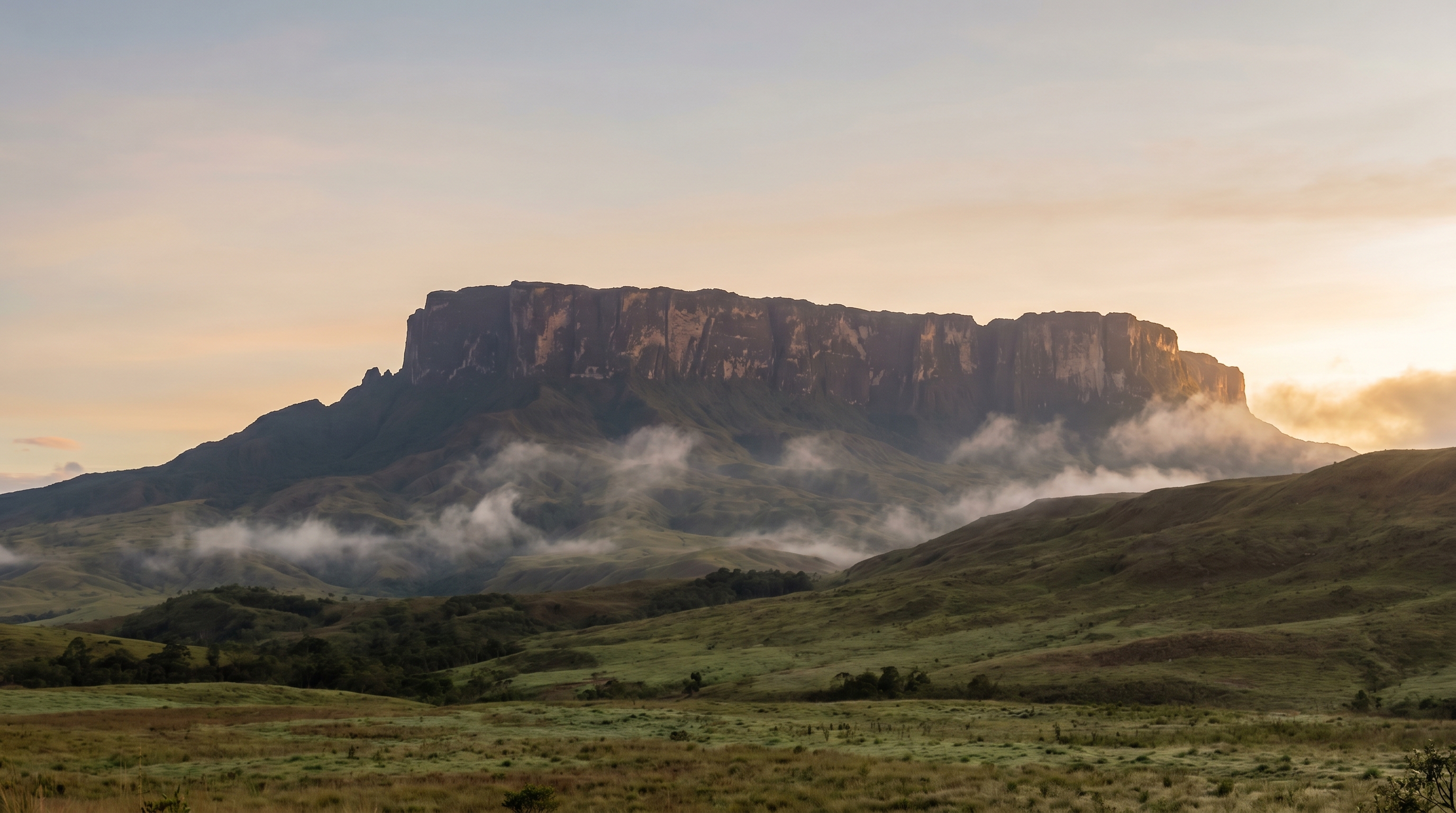
Decide: operator first, then pace, then gear
Roraima is a guided trek by regulation — you can't just walk in. So the first decision isn't dates, it's the operator, because the operator's permit window dictates everything downstream.
We ran a Brunchie poll with three operators we'd shortlisted, with the deciding criteria in the description for each option:
- Operator A. Six-day standard trek. Porter ratio 1:2 (one porter per two trekkers). Cave day on the plateau included. Spanish-speaking guide. USD deposit, bolívar in-country.
- Operator B. Eight-day cave-heavy version. Porter ratio 1:3. Includes a guided trip into Cueva del Conde and a separate visit to one of the Cueva de Ojos de Cristal entrances. English+Spanish guide. USD throughout.
- Operator C. Five-day stripped-down trek for fit groups. Porter ratio 1:1 (carry your own except the cooking gear). Cave day extra. Spanish only.
Poll closed Wednesday by 8 PM Caracas time so we could confirm the operator the following morning. Six votes, three for Operator A, two for Operator B, one for Operator C — Operator A won. The deciding factor on the poll thread was the cave-day-included spec, since splitting that out as an extra fee would have introduced math nobody wanted.
We almost picked Operator B because of the second cave. The poll surfaced the real tradeoff — two extra days of trekking for one extra cave — and the group decided the standard trek with one cave day was the right value. Same poll engine as the Banff group camping post used for campground choice; the topic is different, the mechanic is identical.
The pace-group poll ran the same day. Two of us are seasoned trekkers, two are casually fit, two are first-time multi-day trekkers. We pre-emptively split into two pace groups for the day-three ascent (the part that's actually hard) and agreed to camp together at the plateau. Same trail, same destination, different cadence on the climb.
The gear-ownership poll went up the following Monday — a full week before flights, so anything not covered by the group could be rented in Santa Elena or shipped from Caracas. Tents, stoves, water filter, headlamps, satellite messenger. The satellite messenger was a non-negotiable; we already had two Garmin inReaches between the group, so that was the easiest line item.
Coordinate: pre-load the hangout in Santa Elena
This is the moment that makes the whole trip work, and it takes about ten minutes. The night before we left for Paraitepuy, we sat in the patio of the Santa Elena guesthouse on the guesthouse Wi-Fi, and everyone opened the Brunchie hangout link once on their phone. That's it. Single open, single cache write per device.
The hangout had:
- The full six-day itinerary with daily distances and elevation
- The attendee list with everyone's phone number for the Garmin inReach contact pre-share
- The gear list with who's carrying what
- The expense splitter, primed with the operator deposit (logged before the trip in USD) and the placeholder entries for the Santa Elena grocery run (bolívares)
- The photobooth, empty and waiting
From the moment the truck pulled out for Paraitepuy the next morning, every device's bars went to zero. Every device still opened the hangout. The connectivity banner across the top of the screen made it clear: "You're offline — showing the version loaded just now. New updates will sync when you reconnect." Nobody got confused into thinking they were seeing a live version.
The day-three pace split was the moment this paid off. Three of us reached the plateau at 2 PM and the other three came up at 4 PM. Both groups had the itinerary on their phones, both knew where camp was, both could see the gear list to confirm who had the stove. No texts, no shouting down the gully.
Spend: photo every receipt on the trail, log them in one pass at the guesthouse
Multi-currency was the thing I was most worried about and it turned out to be the easiest — but the trick wasn't logging in real time on the trail. Brunchie deliberately blocks expense create when offline because the splitter affects shared who-owes-what state, and two of us queueing conflicting splits from different connectivity states is exactly the merge problem nobody wants to debug at the airport bar.
So our flow was: at the trail, photograph every receipt on someone's phone (camera roll caption: time + payer + currency). At the guesthouse Wi-Fi back in Santa Elena, one of us spent ten minutes logging everything into the splitter while the rest were unpacking. Every entry got the receipt photo attached. By dinner the math was right on every screen.
Here's how the ledger looked by the end:
- Operator deposit — logged before the trip in USD, paid by one of us, split six ways
- Santa Elena grocery run (snacks, extra water tablets, electrolytes for the climb) — logged at the supermarket in bolívares, split six ways
- Porter tips — paid in cash at base camp on day five in USD (this is the convention there); logged later from the receipt photo, split six ways
- Cave day extra fee — paid in cash on day four in USD; logged later, split among the four of us who did the cave (two stayed at the plateau camp); the splitter handles partial-participant splits
- Final dinner in Santa Elena — logged on the spot in bolívares (we had bars), split six ways
- Boa Vista Brazilian-side beers the day after on the way home — logged in reais, split among the four of us crossing the border, two of us flying out of Caracas
I have done multi-currency settlement on a paper napkin before. It is a worse way to spend the last evening of a trip than nearly any alternative. The ten-minute logging pass at the guesthouse is the right shape — better than queueing parallel edits that have to resolve themselves on reconnect.
Remember: the photobooth queue caught up at the guesthouse
This is the one place Brunchie's offline mode does write while you're disconnected — because each photo is append-only, no two of us could collide. The cave day produced the best photos of the trip: the entrance shot at Cueva del Conde with the headlamps lit, the quartzite formations, the natural Jacuzzi swim later in the afternoon. The summit-day photo at the eastern point of the plateau with the savannah dropping away. Six of us, six phones, six different angles, all queued offline.
We posted to the hangout's photobooth as we went, knowing the queue would catch up. The hangout shows a small "queued — will upload when online" badge on each pending photo so we could see what was waiting. When we hit the guesthouse Wi-Fi back in Santa Elena, the queue drained. By dinner that night the album was full. One shared place, everyone has access, no group-chat scroll-back six weeks later trying to find the cave shot.
What did NOT work offline (be honest)
Things we'd planned for that needed signal:
- Adding a seventh person mid-trip — one of our friends asked from Caracas if she could fly in for the second half. We couldn't send her the invite from base camp; the operator handled it via VHF and we sent the actual Brunchie invite the day we got back to Santa Elena.
- Real-time RSVPs from the family-back-home folks who wanted to follow along. The hangout was view-able to them by a share link, but their RSVP-equivalent reactions came in only when our phones reconnected.
- Live presenter mode on the cave-day briefing. Operator A's guide wanted to walk us through the day's plan with a kiosk-style screen — we used the cached itinerary instead, which worked fine but isn't the live experience.
The off-grid trip planning guide covers the boundaries in more detail. None of these are dealbreakers; they're just things to plan around.
What you should copy from this trip
If you're planning Roraima, or any six-day off-grid group trek:
- Run the operator-and-cave-day poll first, not the dates poll. The operator dictates the dates window; trying to force dates first means renegotiating later.
- Pre-load the hangout the night before on the same Wi-Fi everyone is sharing. Don't trust people to do it independently. Make it a thing you do together.
- Photo every receipt on the trail; do the ten-minute logging pass into the expense splitter at the guesthouse Wi-Fi. Don't try to queue offline edits on shared state — read at the trailhead, edit at the next bars.
- Tell the group on day one to post photos to the hangout, not their camera roll. Photos are append-only so they queue offline and drain at the guesthouse. The cave shots will not survive a group-chat dump.
- A satellite messenger is a separate problem from offline planning. Solve both.
The mechanics in the pillar guide work for any off-grid trip — Roraima, the Cordillera Huayhuash, the Wonderland Trail, Iceland's Laugavegur, or a long weekend in the Cascades. Roraima just happens to be the trip that proves it.
Common questions
How long does the Mount Roraima trek take?
When does signal disappear?
Do we need a satellite messenger?
How do we split costs across two currencies?
What about the rainy season?
Try Brunchie free
Brunchie replaces the spreadsheet, the group chat, and the half-finished invite list. Free forever for the people we built it for.
Get started