How to Plan a Wedding Under $10k: The Guest-Count Math, the Off-Peak Discount, and the Hidden Costs
A $10k wedding works when you attack the guest count first, time it off-peak, and track the hidden line items before they eat the budget. Here's the actual workflow, not a gallery of cheap centrepieces.
A $10k wedding is entirely doable — but not by trimming everything evenly until it feels cheap. It works when you make a few big structural calls early and then hold the line. The number on the invoice is your spend, the couple's budget; the tool you plan it in shouldn't add to it (Brunchie is free, with no per-guest fees).
The full workflow — guest list, RSVPs, expenses, seating — is in the complete wedding planning guide. This post is the under-$10k layer: where the money actually goes, and the three decisions that keep it in range.
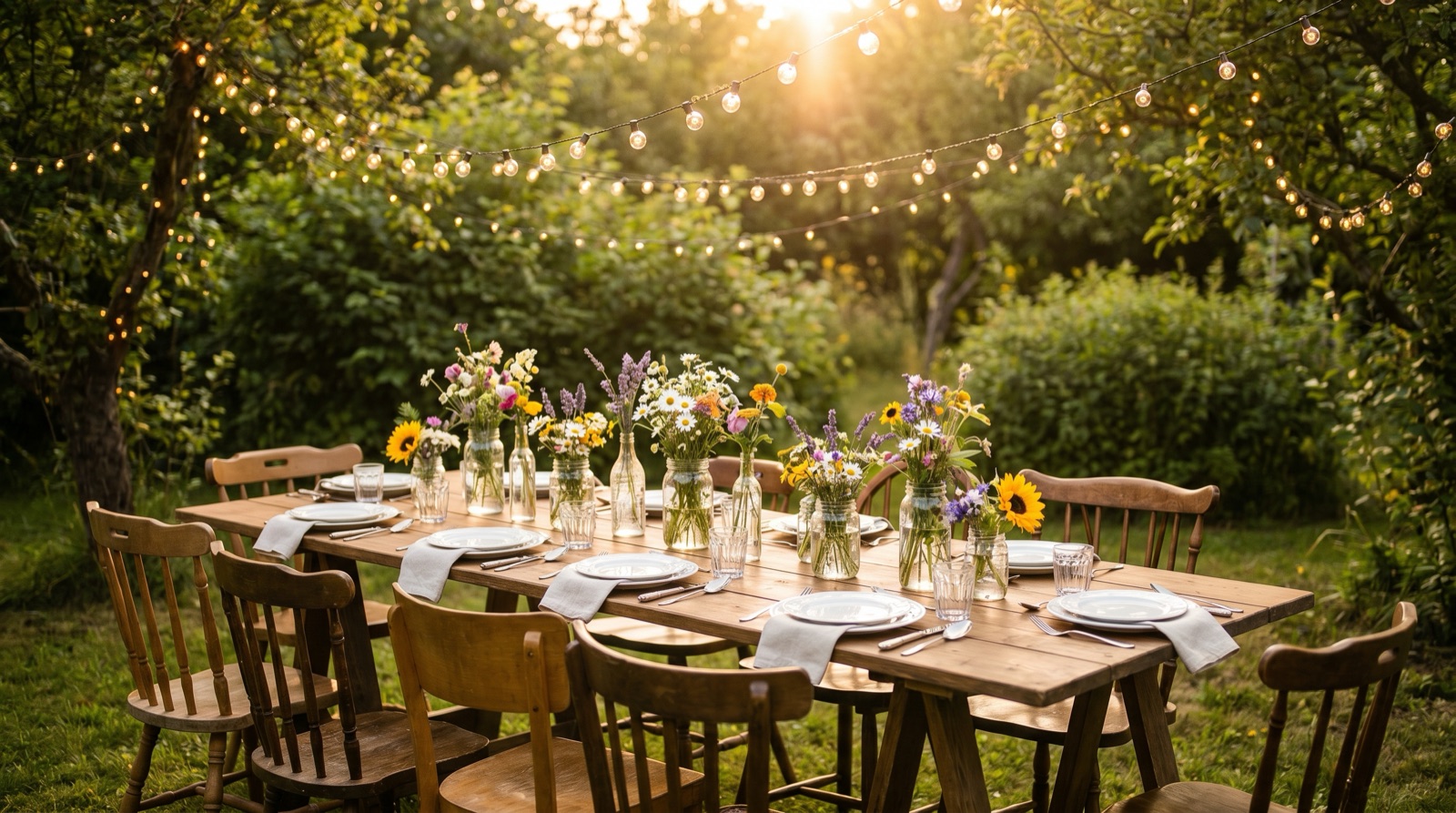
Decide: guest count is the budget, before anything else
What. Set the guest cap first — before the venue, before the dress, before the Pinterest board.
Why. Guest count is the single biggest lever on the whole budget. Every head multiplies catering, rentals, invitations and favours at once, and venue plus catering routinely eat well over half the total. Cutting a 120-person list to 40 is roughly a two-thirds cut on every per-head cost simultaneously — nothing else moves the number that far.
So what. Decide the cap as a number, write it down, and treat it as fixed. Then name the one or two things you'll splurge on (photos, the dress) and consciously cut the rest, rather than shaving every line a little. That priority list, decided together up front, is what stops the budget from being eaten by whoever asks last.
Coordinate: hold the cap and DIY the rest
A small budget creeps back up one "just one more couple" at a time. So the coordination job is keeping the headcount honest: track RSVPs against the hard cap so you can see, in real time, when you're at the line. In Brunchie the guest list and the RSVP count sit together, so the cap isn't a number in your head — it's a number you watch.
The savings come from swaps, and most of those are coordination, not cash: a restaurant or backyard over a dedicated venue, a buffet or family-style meal over plated service, a playlist over a DJ, a friend-officiant over a paid celebrant. Run the who-brings-what and who-does-what as quick polls so the work is shared and visible instead of landing on one person. Same poll-and-assign machinery the wedding pillar uses, pointed at the jobs you're doing yourselves.
The couples who land under ten grand almost always cut the list before they cut anything else — and never regret it.
Spend: track the deposits and the costs nobody quotes you
Host-private budget tracking is the entire game at this tier. The figures that blow a $10k plan are usually the ones not on the headline quote: service charges and gratuities, corkage, overtime, taxes and vendor minimums. And a non-refundable deposit ties up real money months early.
So log every deposit the day it's paid and every all-in quote with its service charge and tax included, split host-private between the couple. Brunchie's expense splitting keeps that math in one place and visible only to the hosts — you see the running total against your cap, not a surprise at the end. The tool charges you nothing per guest, so the only numbers in the ledger are the ones you actually chose to spend.
Remember: let everyone's phone be the second photographer
A tight budget often can't stretch to a second shooter or hours of candid coverage — and that's exactly where a shared photobooth album earns its place. Guests' phones cover the in-between moments, everything lands in one album, and you get the breadth of coverage without the line item.
That's the shape of a wedding that comes in under $10k: cap the guest list, time it off-peak, track the deposits and the hidden costs, and let the room help you remember it. The wedding planning guide is the backbone; this is the layer that keeps it honest with the budget.
Common questions
What's the fastest way to cut a wedding budget?
Does the day of the week really change the cost?
What hidden costs blow a small wedding budget?
Try Brunchie free
Brunchie replaces the spreadsheet, the group chat, and the half-finished invite list. Free forever for the people we built it for.
Get started